
The word “marijuana” wasn’t always the go-to name.
And its rise? Not exactly organic.
Before the 20th century, cannabis was widely known as — wait for it — cannabis. It was used in medicines, tinctures, and everyday remedies. No panic. No hysteria. No Reefer Madness energy.
Then came the 1930s.
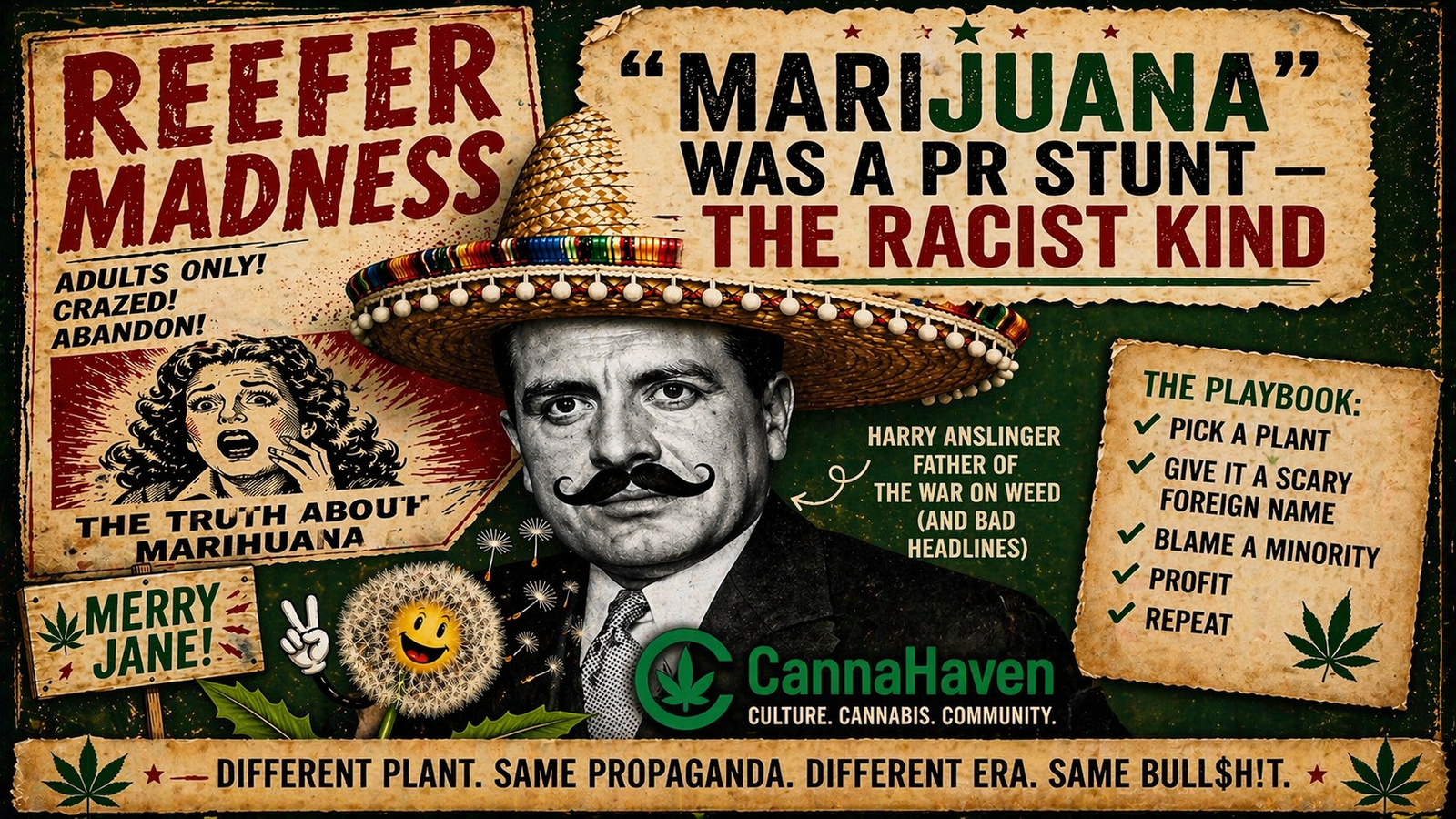
Enter Harry Anslinger — the architect of America’s first major anti-cannabis campaign. Instead of calling it “cannabis,” officials and media began heavily using the term “marijuana”, a word associated with Mexican Spanish.
Why the switch?
Because it sounded foreign. And at the time, that was the point.
The U.S. was dealing with anti-Mexican sentiment during and after the Mexican Revolution. By tying cannabis to Mexican communities — using a word unfamiliar to many Americans — policymakers were able to weaponize fear, racism, and misinformation.
Cue the propaganda from everything from “Reefer Madness” to claims of violence and insanity after just one inhale — largely funneled by media stories linking cannabis to crime and immigrants.
It worked.
By 1937, the Marihuana Tax Act effectively criminalized cannabis nationwide, built on a foundation of stigma rather than science.
Fast forward to today, and the irony is thick enough to hotbox a room:
The same plant once demonized under a loaded name is now a multibillion-dollar industry — sold in boutique jars with terpene breakdowns and flavor notes like it’s wine.
The war on cannabis didn’t just criminalize a plant — it rebranded it with intention. And that branding still lingers today in the form of propaganda.